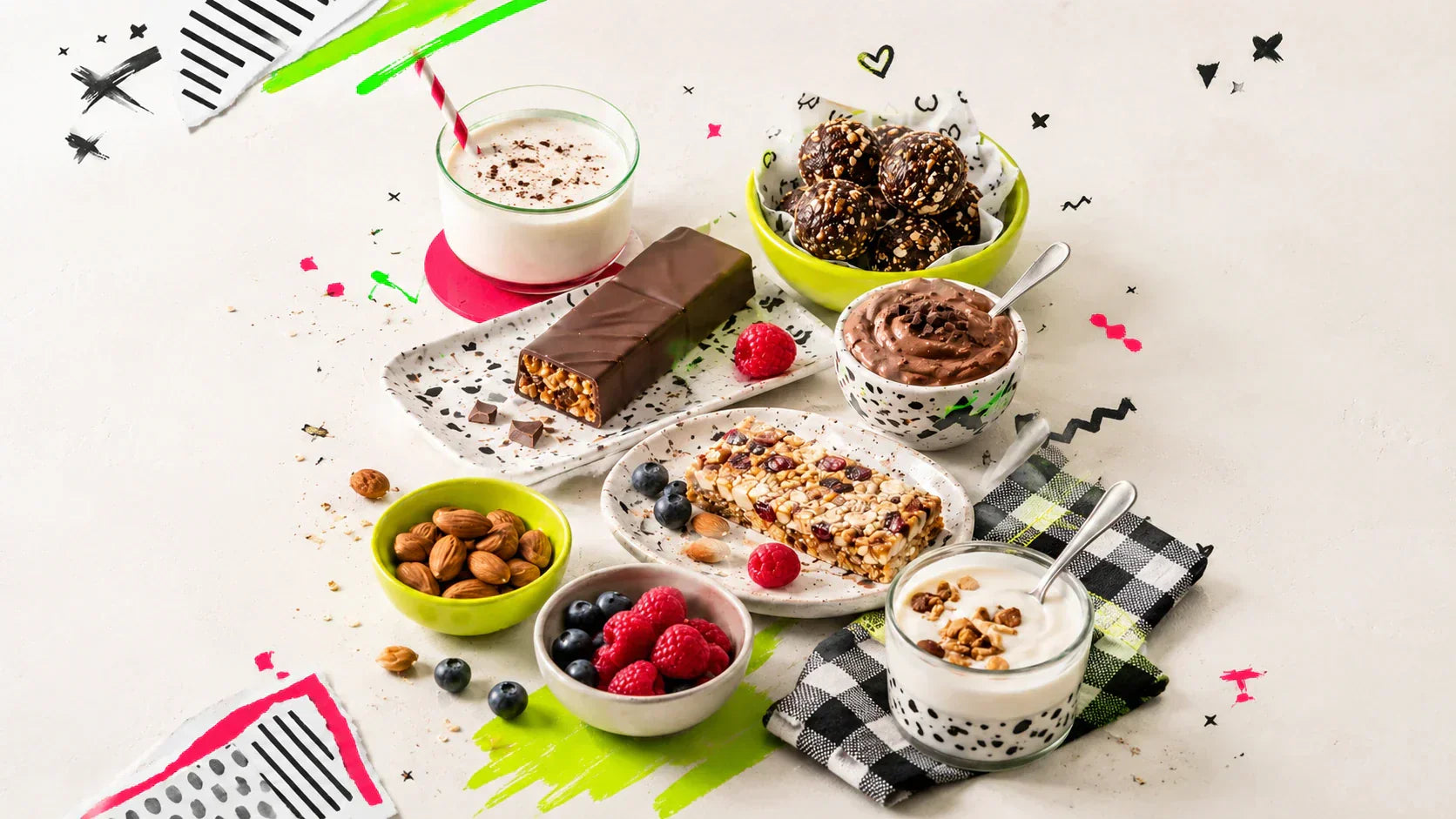
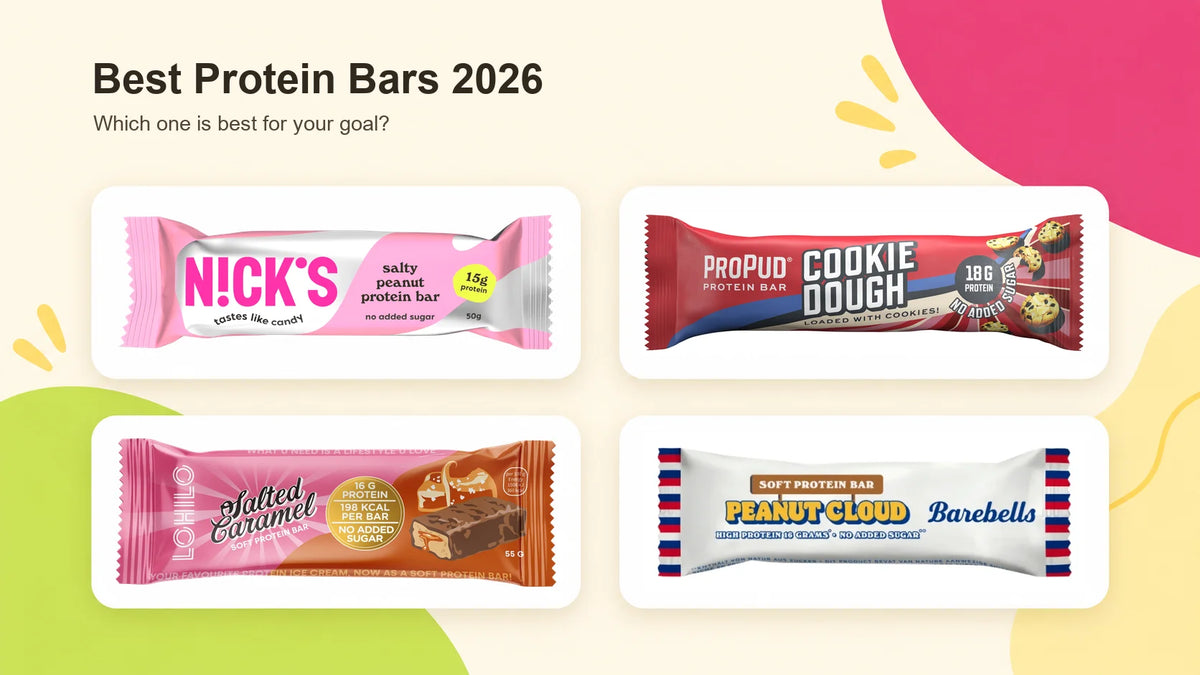
Protein bars have one annoying habit: every wrapper looks like it has already won an award.
20 g protein. Low sugar. No added sugar. High protein. Soft. Crunchy. Dessert-style. Post-workout. On-the-go.
So which protein bar is actually best?
There is no single winner.
The best protein bar depends on what you want from it: maximum protein, fewer calories, very little sugar, a smaller snack, or something that feels more like a chocolate bar than sports nutrition.
We compared popular protein bars from N!CK’S, NJIE ProPud, LOHILO and Barebells using the things we can actually measure:
- protein per bar
- calories per bar
- sugar per bar
- portion size
- protein per calorie
One thing before we start.
njom sells N!CK’S, ProPud and LOHILO.
So yes, we have skin in the game.
That is exactly why we are not giving our own brands automatic first place. The numbers decide the objective categories. Taste and snack experience are a different story.
The quick answer
| If you want... | Our pick | Why |
|---|---|---|
| Most protein per bar | Barebells Salty Peanut | 20 g protein in a 55 g bar |
| Strong protein-to-calorie balance | ProPud Smooth Caramel | 18 g protein for about 195 kcal |
| Lowest sugar in this comparison | LOHILO Chocolate Brownie | Around 0.5 g sugar per bar |
| Lowest calories in this comparison | N!CK’S Dulce de Leche | Around 186 kcal in a 50 g bar |
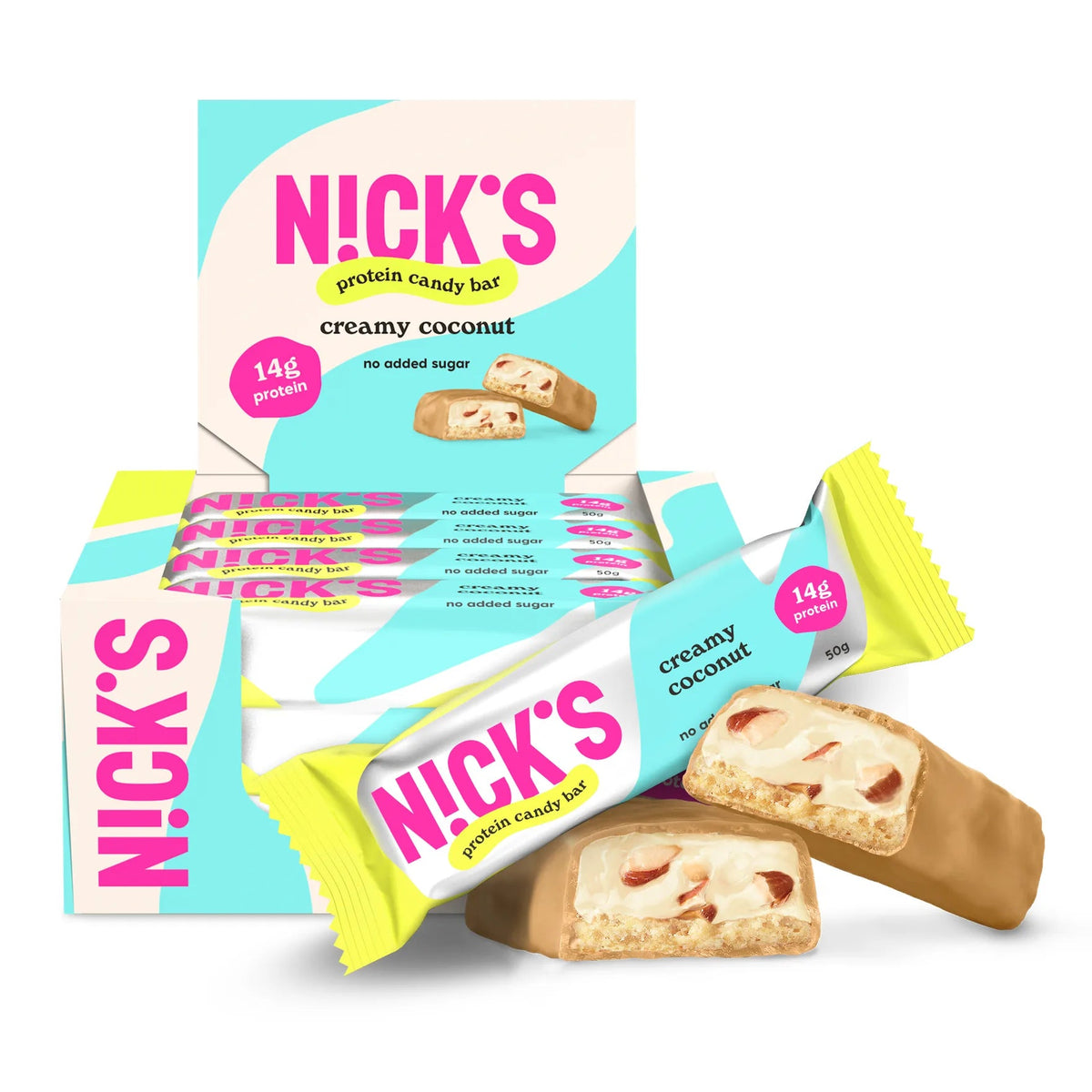
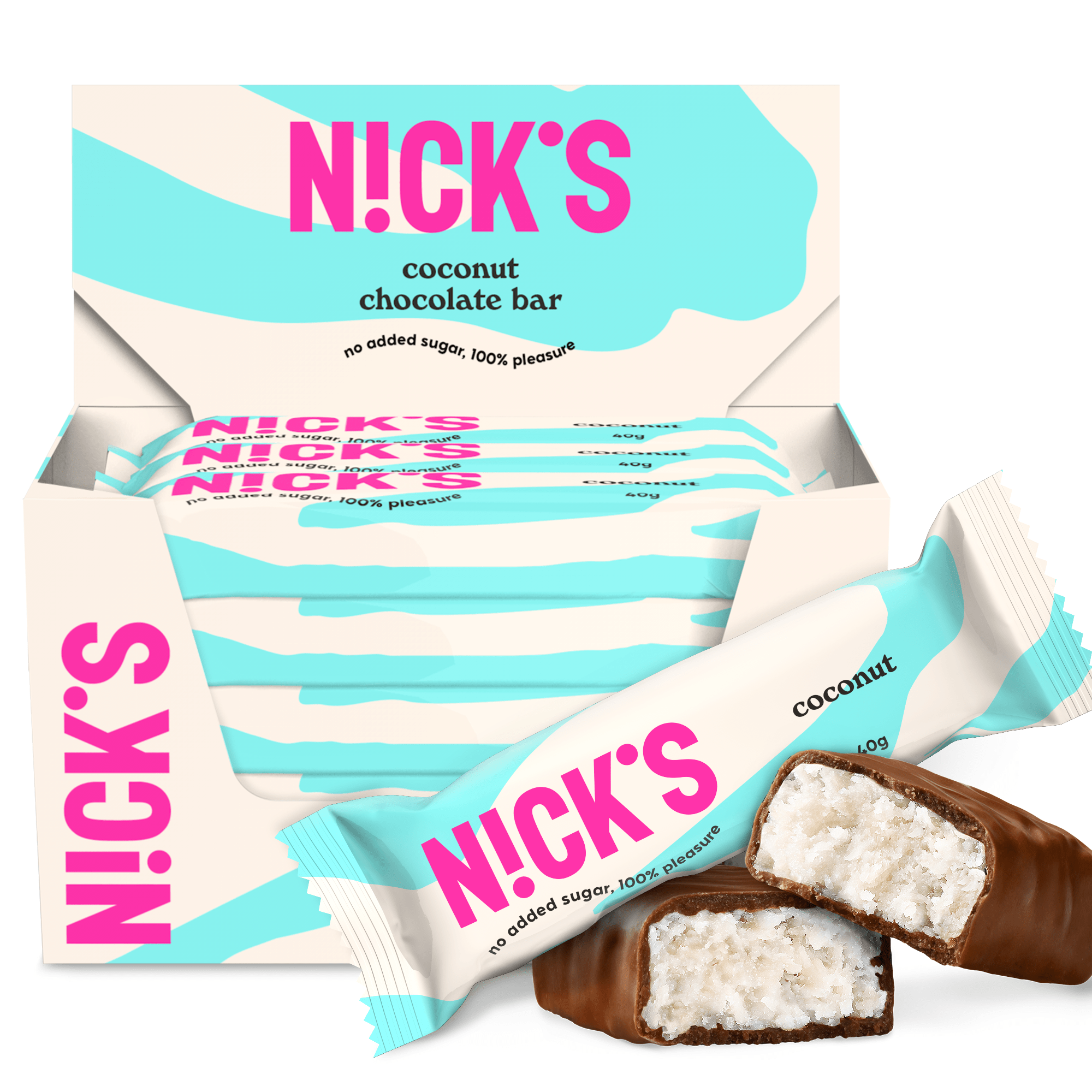
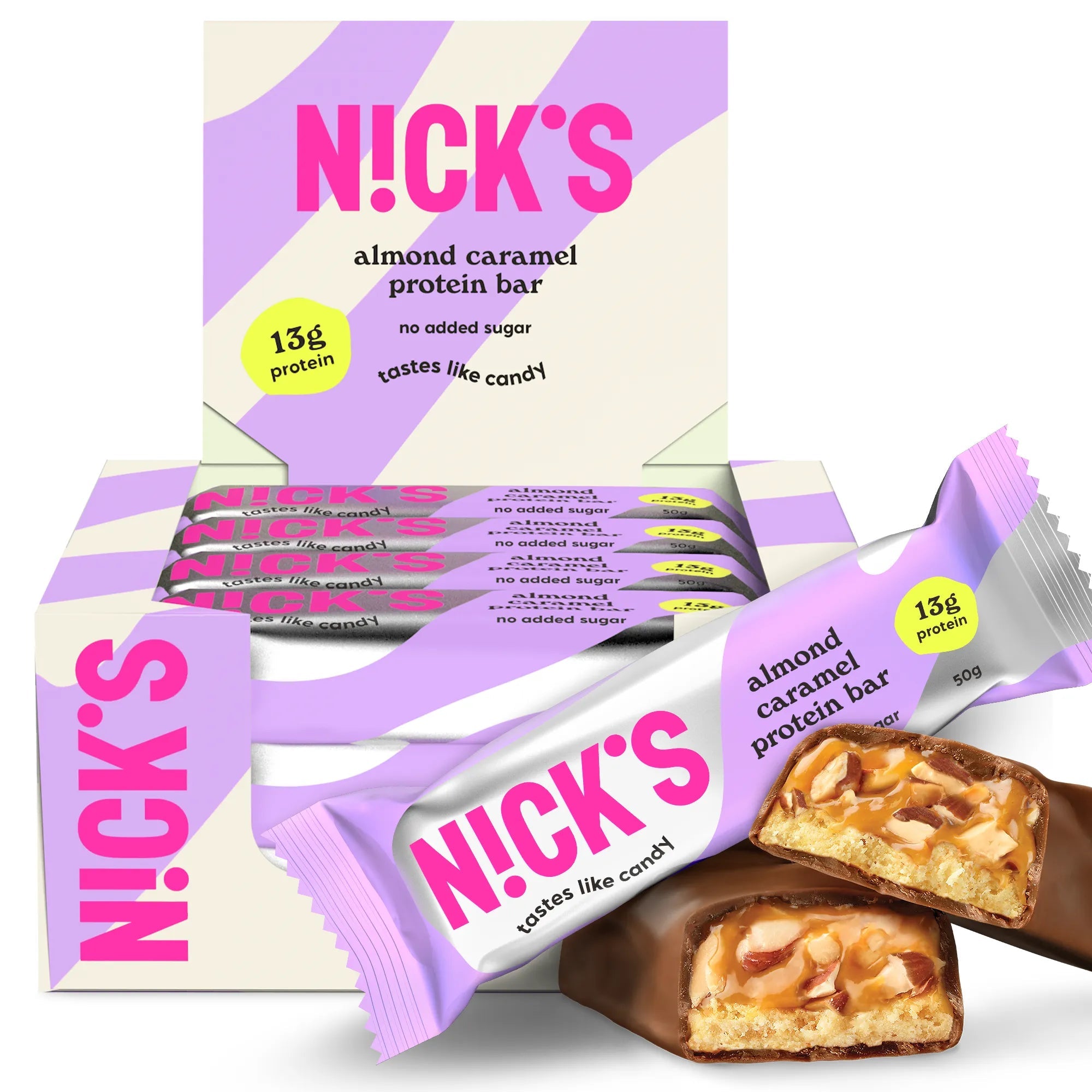
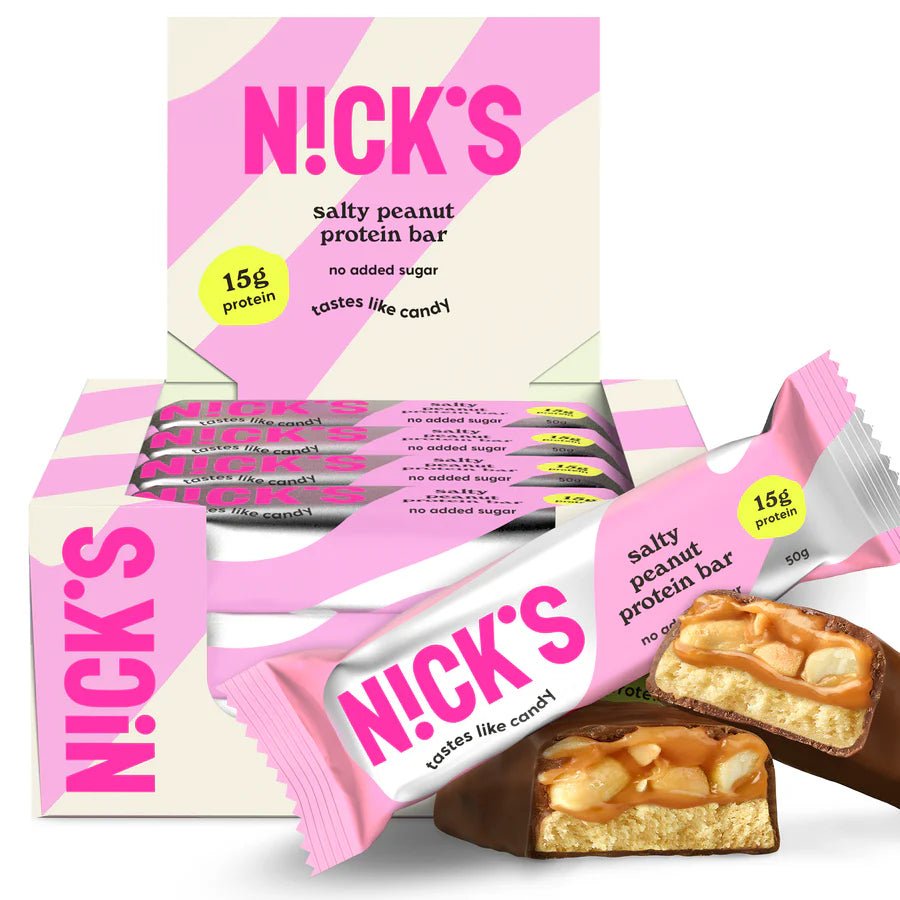
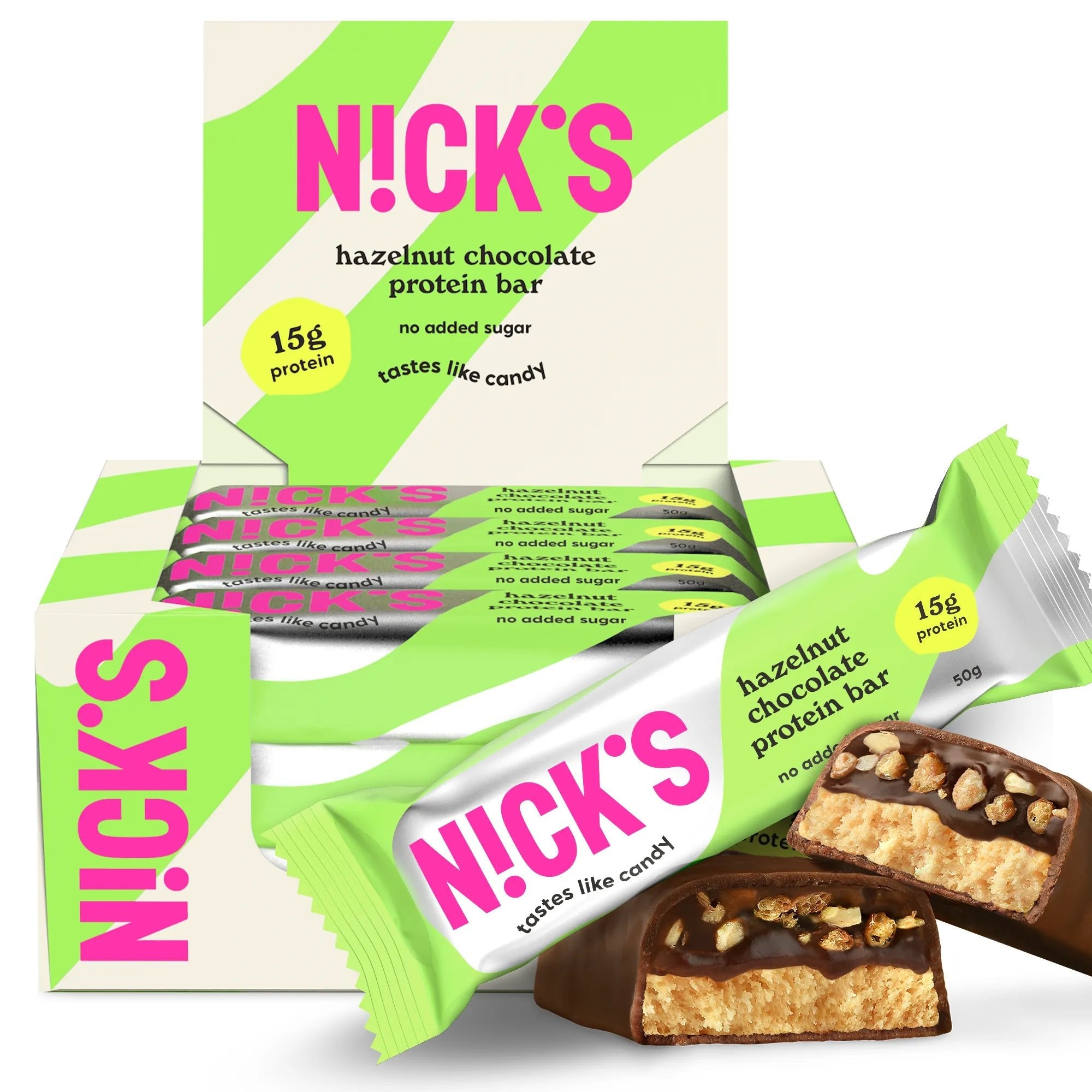
| A smaller candy-style protein snack | N!CK’S | 50 g format, 13–15 g protein and very much not gym-food energy |
| Dessert-style bar with more protein | ProPud | Typically 17–18 g protein in a 55 g bar |
So yes, Barebells wins one category.
We survived.
Now let’s look at what actually matters when choosing yours.
Protein bar comparison
To keep this useful instead of turning it into a spreadsheet with a personality disorder, we selected representative flavours from the main brands.
Nutrition values can vary between flavours.
| Protein bar | Size | Protein | Calories | Sugar | kcal / 10 g protein |
|---|---|---|---|---|---|
| Barebells Salty Peanut | 55 g | 20 g | 203 kcal | 1.5 g | ~102 |
| ProPud Smooth Caramel | 55 g | 18 g | 195 kcal | 1.8 g | ~108 |
| ProPud Cinnamon Bun | 55 g | 17 g | 194 kcal | 1.4 g | ~114 |
| LOHILO Chocolate Brownie | 55 g | 16 g | 198 kcal | 0.5 g | ~124 |
| N!CK’S Dulce de Leche | 50 g | 14 g | 186 kcal | 2.4 g | ~133 |
| N!CK’S Triple Chocolate | 50 g | 15 g | 202 kcal | 3.4 g | ~135 |
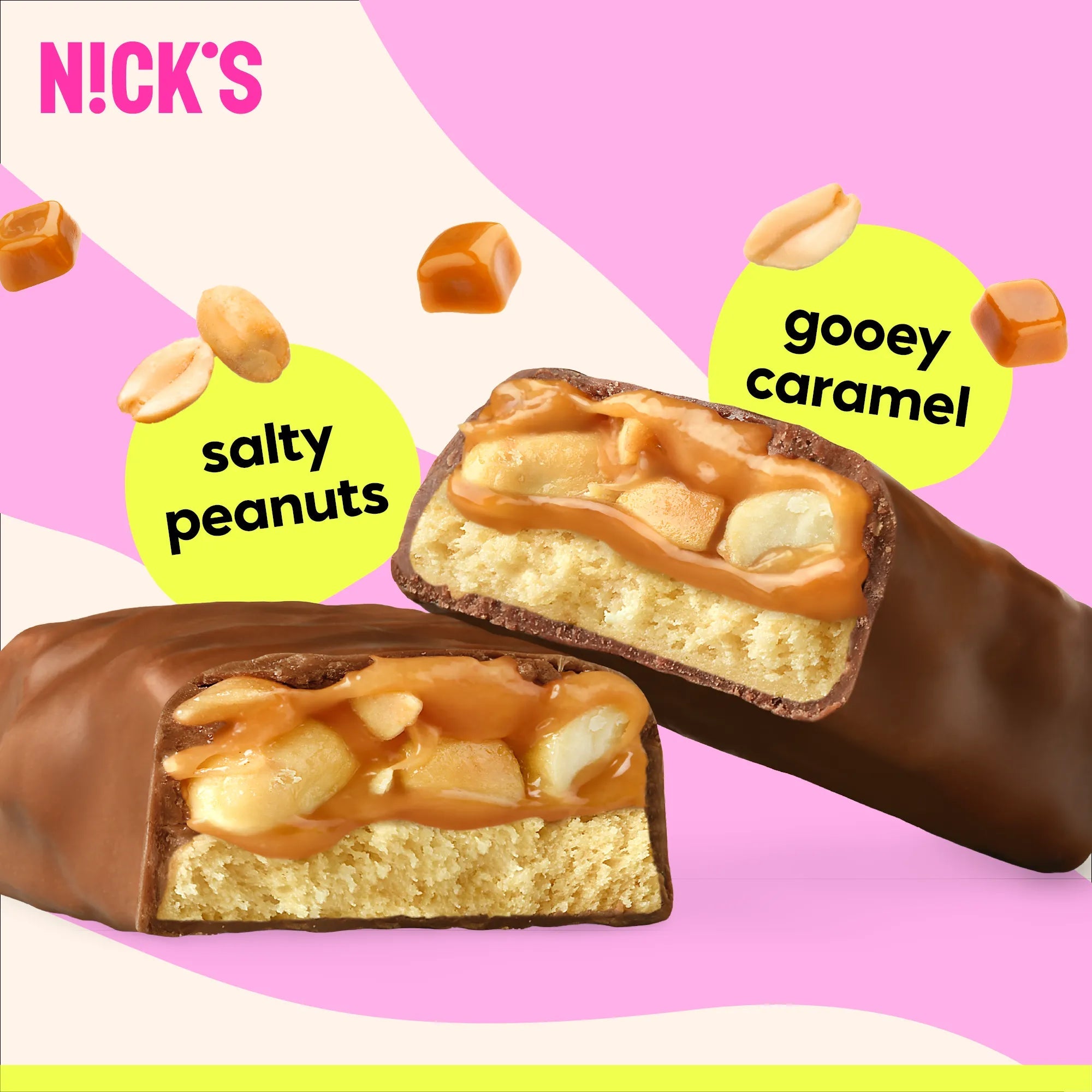
| N!CK’S Salty Peanut | 50 g | 15 g | 203 kcal | 1.9 g | ~135 |
Nutrition data checked in September 2026. Recipes and nutrition values can change, so always check the current product packaging when a specific value matters to you.
Which protein bar has the most protein?
If the only question is:
“Which bar gives me the most protein?”
Barebells wins this comparison with 20 g protein in a 55 g bar.
ProPud is close behind. Most ProPud bars provide around 17–18 g protein per 55 g bar, depending on flavour.
LOHILO sits around 16 g in the nutrition information we checked.
N!CK’S 50 g protein bars usually provide around 13–15 g protein depending on flavour.
So no, N!CK’S does not win the maximum-protein category.
And that is completely fine.
A protein bar does not have to be the most concentrated protein source on the shelf to be the right snack.
Which protein bar gives you the most protein for the calories?
This is often a better comparison than protein alone.
We calculated approximately how many calories you need to eat to get 10 g of protein:
Barebells Salty Peanut: ~102 kcal
ProPud Smooth Caramel: ~108 kcal
ProPud Cinnamon Bun: ~114 kcal
LOHILO Chocolate Brownie: ~124 kcal
N!CK’S Dulce de Leche: ~133 kcal
N!CK’S Salty Peanut: ~135 kcal
If protein efficiency is your main goal, Barebells is strongest in this group.
But ProPud is not far behind.
And that makes ProPud particularly interesting: you get noticeably more protein than from the smaller N!CK’S bars, while several flavours still stay around or below 200 kcal.
Best NJOM pick for protein-to-calorie balance: ProPud
More protein.
Still dessert.
Fair deal.
Which protein bar has the fewest calories?
Among the bars compared here, N!CK’S Dulce de Leche comes in at around 186 kcal per 50 g bar.
ProPud also has some surprisingly light options:
ProPud Cinnamon Bun: ~194 kcal
ProPud Smooth Caramel: ~195 kcal
LOHILO Chocolate Brownie: ~198 kcal
But portion size matters.
N!CK’S bars are 50 g, while the ProPud, LOHILO and Barebells examples here are 55 g.
A smaller bar will often contain fewer total calories because, well, there is less bar.
That can be a feature rather than a weakness.
If you want a controlled sweet snack rather than the maximum possible protein dose, the smaller format may suit you better.
Lowest-calorie pick in this comparison: N!CK’S Dulce de Leche
186 kcal.
Caramel involved.
Could be worse.
Which protein bar has the least sugar?
This category is almost unfair because most of these bars are already very low in sugar.
But one stands out.
LOHILO Chocolate Brownie: around 0.5 g sugar per bar
For comparison:
ProPud Cinnamon Bun: ~1.4 g
Barebells Salty Peanut: ~1.5 g
ProPud Smooth Caramel: ~1.8 g
N!CK’S Salty Peanut: ~1.9 g
N!CK’S Dulce de Leche: ~2.4 g
At these levels, we would not choose between two bars because one has 1.4 g sugar and another has 1.9 g.
Protein, calories, portion size, ingredients and whether you actually enjoy eating the thing matter too.
Lowest-sugar pick in this comparison: LOHILO Chocolate Brownie
That 0.5 g is hard to argue with.
Which protein bar tastes most like a proper sweet snack?
Now the spreadsheet starts losing power.
If your ideal protein bar is basically:
“Can this please feel less like gym food?”
N!CK’S makes the strongest case.
N!CK’S bars are smaller at 50 g and usually contain around 13–15 g protein.
But chasing the largest protein number is not really what these bars are about.
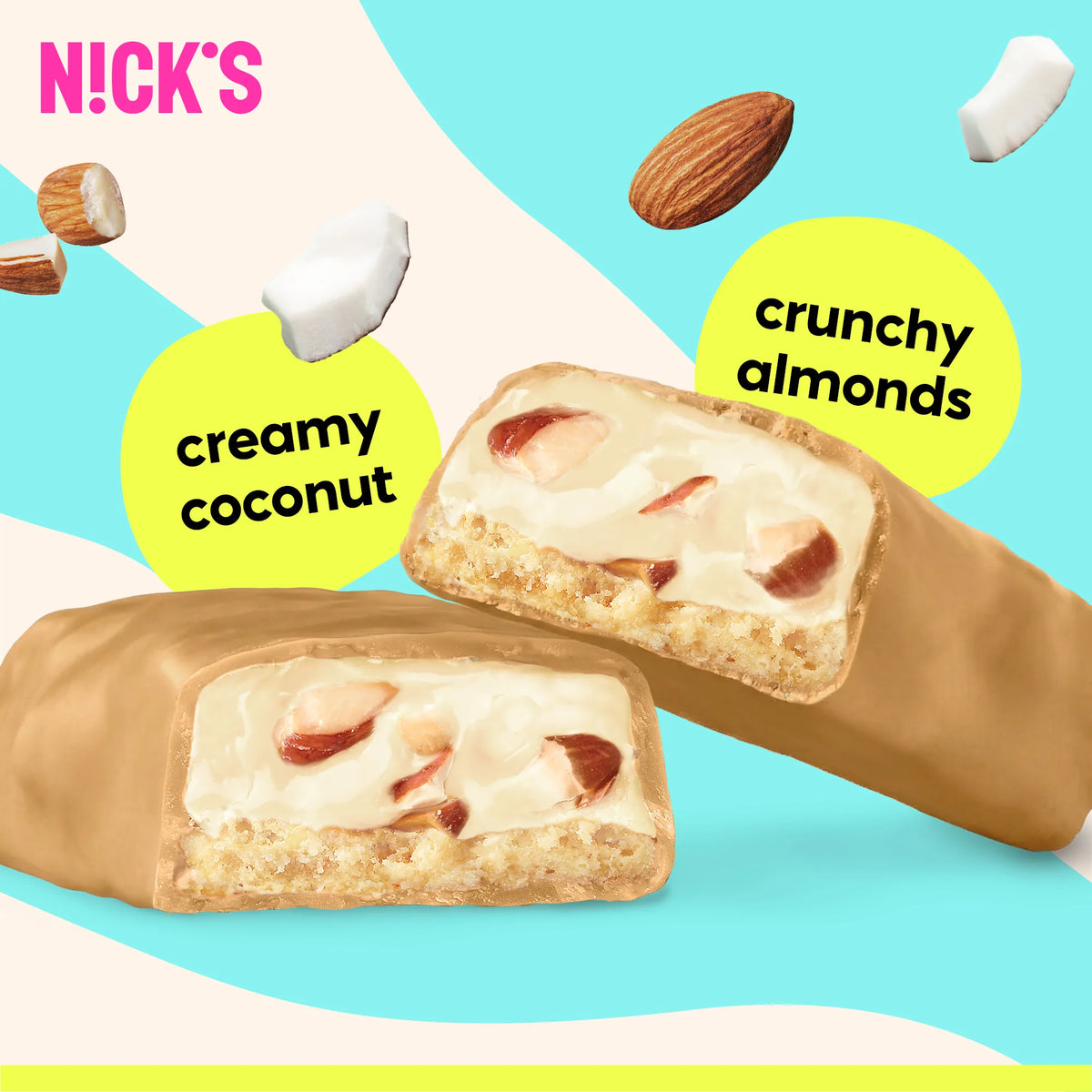
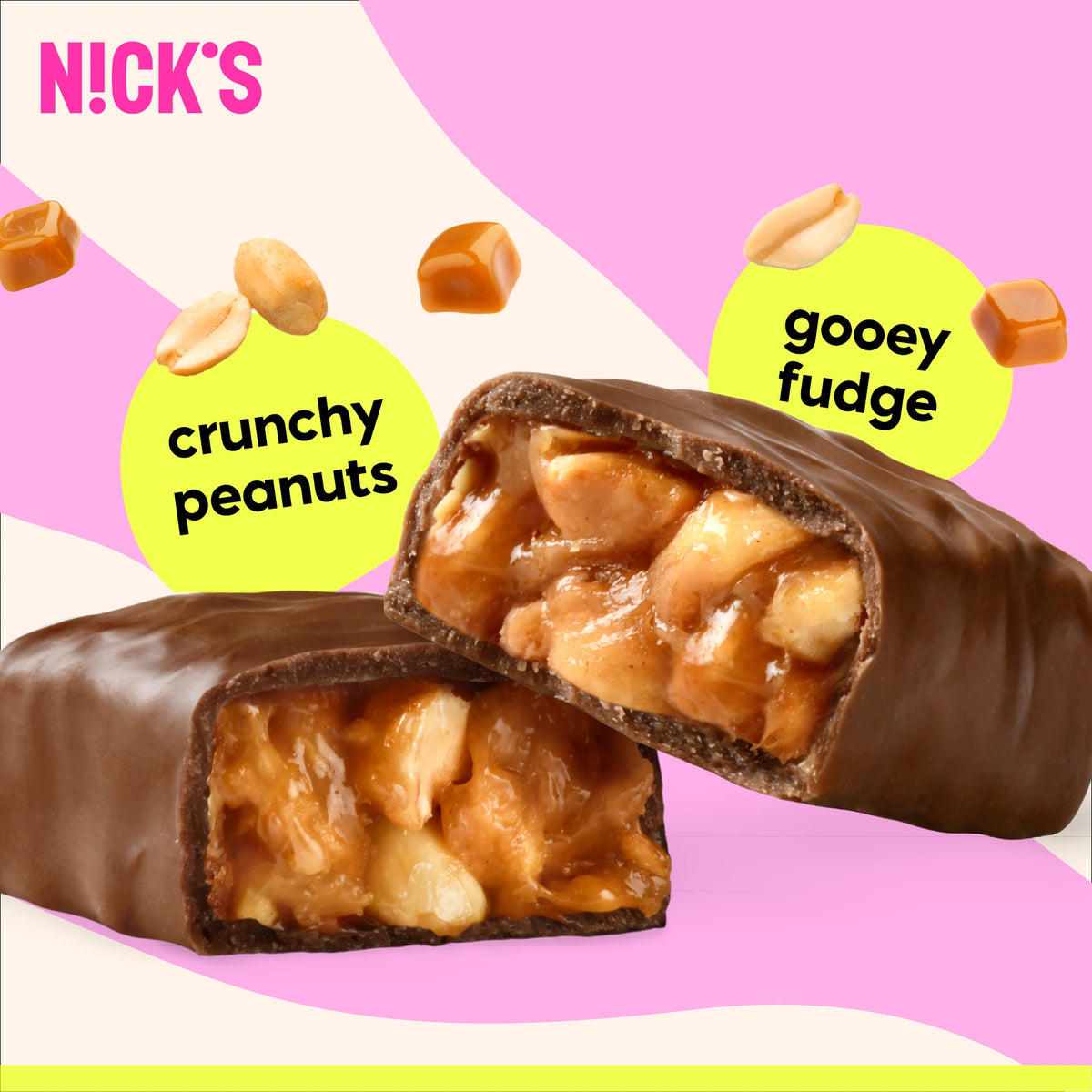
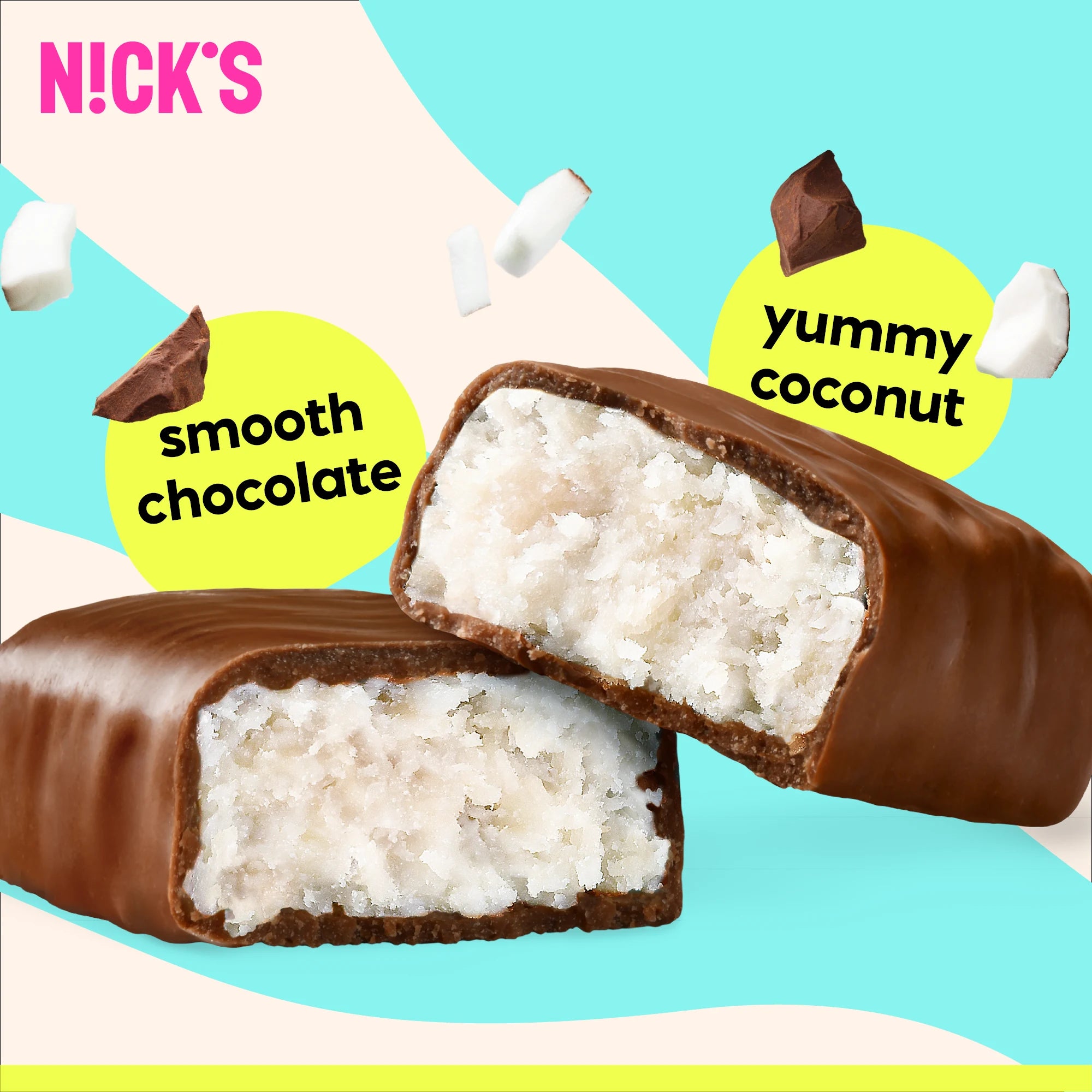
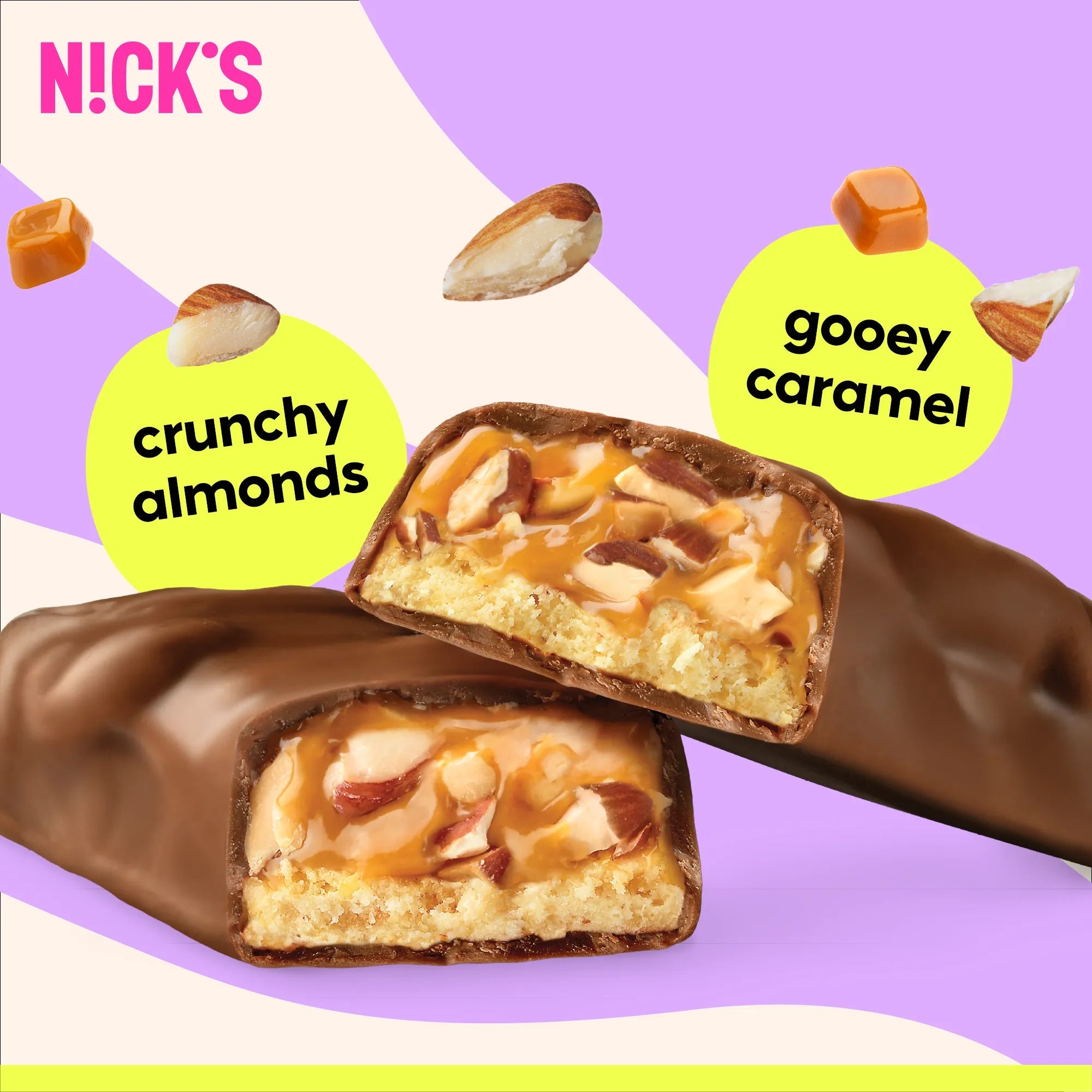
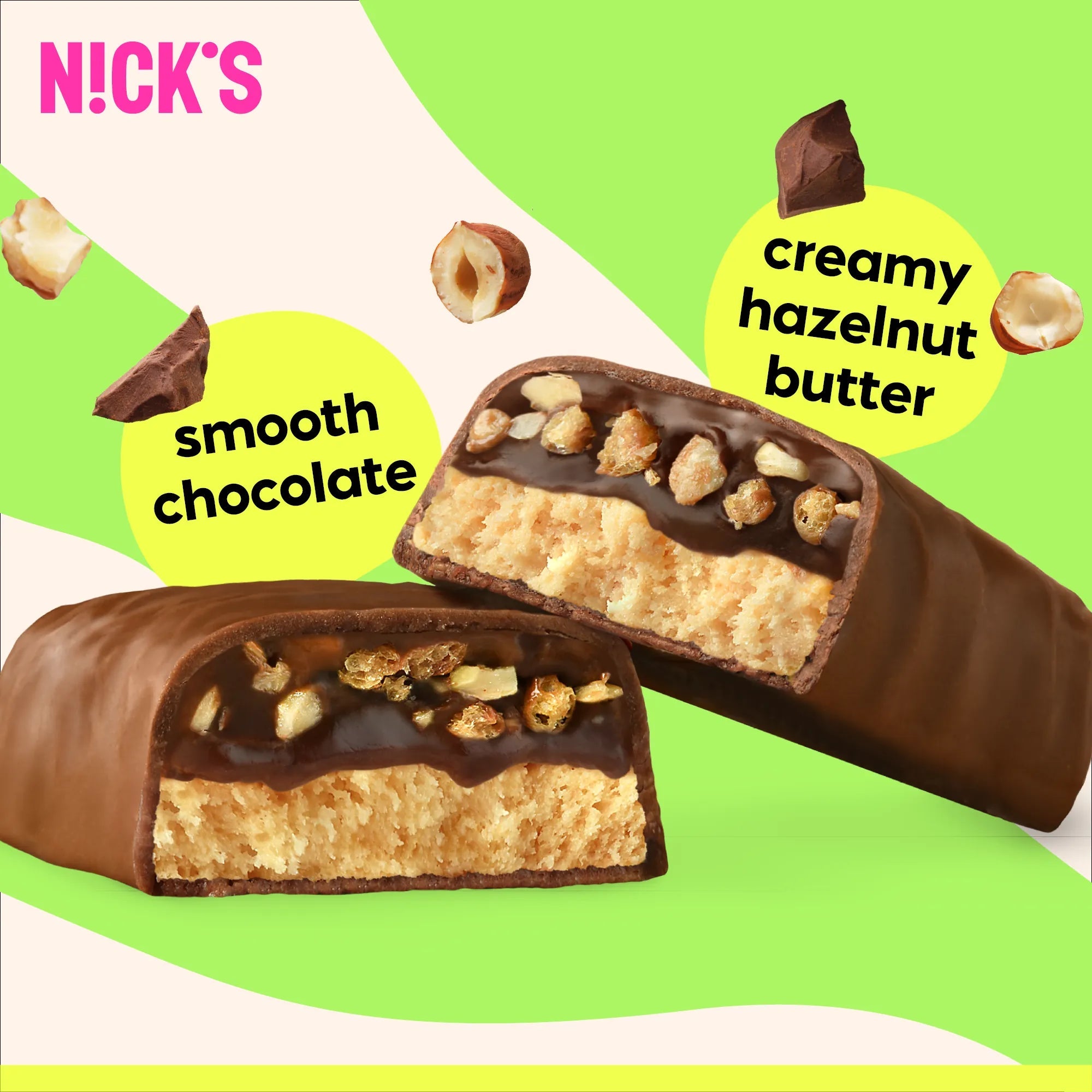
The whole range leans deliberately towards caramel, chocolate, nuts and dessert-style flavours rather than the classic dense protein-bar experience.
If your choice is between grabbing a regular chocolate bar and grabbing something sweet that also gives you 13–15 g protein, that is where N!CK’S makes a lot of sense.
Best candy-style protein snack: N!CK’S
Not the most protein.
Much more fun than reading a macro spreadsheet.
What if I want more protein but still want dessert?
Then we would look at ProPud.
This is probably the strongest all-round protein-bar proposition in the current njom range.
Most ProPud bars provide around 17–18 g of protein in a 55 g bar.
And the flavours are not exactly trying to hide in the sports-nutrition aisle:
That is the point.
You get closer to the protein numbers of the classic 20 g protein-bar category without giving up the dessert part.
Best balance of high protein + treat: ProPud
If you want one recommendation that sits somewhere between “protein first” and “I also want to enjoy this”, start here.
Where does LOHILO fit?
LOHILO sits in a useful middle position.
The 55 g bars we checked provide around 16 g protein, while several flavours stay around 200 kcal.
And LOHILO Chocolate Brownie has the lowest sugar figure in this comparison.
So if your priorities look something like:
very low sugar + decent protein + dessert flavour
LOHILO deserves a serious look.
Best very-low-sugar pick: LOHILO
One important note from our research:
Some product marketing descriptions can show a different protein claim from the current nutrition table. For this comparison, we always use the nutrition table.
Numbers before hype.
What is the best protein bar after a workout?
You do not need to sprint towards a protein bar the second your workout ends.
Your total daily protein intake matters more than hitting some magical three-minute post-workout window.
But protein bars are useful because they are convenient.
If your next proper meal is still a while away, a bar with around 17–20 g protein can be an easy option.
That gives ProPud and Barebells an advantage if maximum protein in one bar is what you want.
If you are going home to eat a proper meal anyway?
Choose the bar because you want it.
Not because the gym clock shouted at you.
Our NJOM post-workout pick: ProPud
17–18 g protein.
Easy to throw in a gym bag.
No shaker required.
Which protein bar is best for weight management?
There is no protein bar that causes weight loss.
Sorry, marketing departments.
Body-weight change depends mainly on your overall energy intake over time.
A protein bar can still be useful if it replaces a more calorie-dense snack and makes your eating routine easier to stick to.
If calories matter to you, compare the whole bar, not just nutrition per 100 g.
Some options around or below 200 kcal in this comparison include:
N!CK’S Dulce de Leche: ~186 kcal
ProPud Cinnamon Bun: ~194 kcal
ProPud Smooth Caramel: ~195 kcal
LOHILO Chocolate Brownie: ~198 kcal
The important question is not:
“Does this say protein on the wrapper?”
It is:
“Does this fit what I am eating today?”
Much less exciting.
Much more useful.
Is “no added sugar” the same as sugar-free?
No.
And food packaging does not always make the difference obvious.
No added sugar means sugars have not been added to the product for sweetening. The product can still contain naturally occurring sugars from ingredients such as milk or nuts.
Sugar-free is a different claim and refers to a very low total sugar content.
Many protein bars use sweeteners and polyols instead of regular added sugar.
That is how a bar can taste very sweet while showing only a small amount of sugar on the nutrition table.
So do not judge the whole bar from one line on the front of the wrapper.
Flip it around.
The boring table on the back is useful sometimes.
Is 20 g of protein always better than 15 g?
No.
It is more protein.
That part is easy.
But “more protein” and “better snack for you” are not automatically the same thing.
Your choice can also depend on:
- calories
- portion size
- sugar
- ingredients
- texture
- price
- what else you eat that day
- whether you actually like it
If your goal is maximum protein, choose the 20 g bar.
If you want something smaller and sweeter that still gives you 14–15 g protein, choose that.
Food does not have to win Excel to win your snack drawer.
So which protein bar should you choose?
Here is the simplest version.
I want maximum protein
Start with bars around 18–20 g protein.
Barebells or ProPud.
I want a strong protein-to-calorie balance
I want as little sugar as possible
LOHILO Chocolate Brownie stands out in this comparison.
I want a smaller bar
I want my protein bar to feel more like candy
Definitely N!CK’S.
I want more protein but still want dessert flavours
I want low sugar + dessert-style flavour
Look at LOHILO.
There does not need to be one winner.
That is why there is more than one protein bar in the drawer.

Shop protein bars
For the smaller, candy-style option with 13–15 g protein.
For 17–18 g protein and very dessert-like flavour choices.
For low-sugar, soft protein-bar options.
Because sometimes research ends with “I’ll take a mixed box.”
Frequently asked questions
What is the best protein bar?
There is no universal best protein bar. If maximum protein matters most, look for bars around 18–20 g protein. If calories, sugar, portion size or taste matter more, another bar may be a better fit.
How much protein should a protein bar have?
Around 15–20 g protein per bar is already a meaningful amount for a convenient snack. Larger or more protein-focused bars can provide 20 g or more, while smaller treat-style bars may contain less.
Is 15 g of protein enough in a protein bar?
It can be.
Fifteen grams is less than 20 g, but whether that difference matters depends on the rest of your diet and why you are eating the bar.
If you want a snack rather than a meal replacement, 15 g can still be useful.
Which protein bar has the lowest sugar?
Among the products compared here, LOHILO Chocolate Brownie had the lowest listed sugar content at around 0.5 g per 55 g bar.
Nutrition values vary between flavours and can change when recipes are updated.
Should I eat a protein bar before or after training?
Either can work.
A protein bar can be convenient before training if you tolerate it well, or afterwards if your next meal is still a while away.
Your total daily nutrition matters more than finding one perfect protein-bar moment.
Can I eat a protein bar every day?
A protein bar can fit into an everyday diet as a convenient snack.
It does not need to replace normal meals, and it makes more sense to look at your overall protein intake, energy intake and food variety than to judge one product in isolation.
Are no-added-sugar protein bars sugar-free?
Not necessarily.
“No added sugar” and “sugar-free” are different claims. A no-added-sugar protein bar can still contain naturally occurring sugars.
The njom verdict
If you came here hoping for one dramatic winner, sorry.
Barebells wins protein quantity in this comparison.
ProPud is our strongest all-round option when you want more protein without pushing calories too high.
LOHILO delivers an impressively low-sugar option.
N!CK’S makes the strongest case when you want a smaller protein snack that still feels like an actual treat.
That is exactly why we would rather stock different types of protein bars than pretend one wrapper is perfect for everybody.
Pick the one that fits your goal.
Then pick the flavour you will actually want to eat.
That second part matters more than protein-bar marketing likes to admit.